



About SCIE
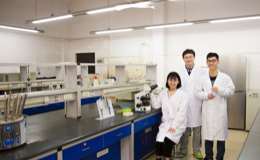
The UESTC is listed in the “211” Project and “985” Project for higher education in China. Its School of Communication and Information Engineering (SCIE for short) was founded on March 25, 1995, formerly the Department of Radio Technology which was one of the oldest departments in the UESTC. It has two state key labs (State Key Lab of Broad-band Optic Fiber Transmission and Communication Network, State Key Lab of Anti-Interference Communication), one research institute on signals and systems, three provincial or ministerial key labs and other research institutes.
Four of the SCIE’s programs are nation’s key Ph.D. program, including Communication and Information Systems, Signal and Information Processing, Circuits and Systems, and Electromagnetic Field and Microwave Technology. Our school offers undergraduate program in Communication Engineering (Radio Technology, Communication Engineering and Computer Communication) and Network Engineering. We also offer graduate programs in Communication and Information Engineering, Signal and Information Processing, Optical Engineering and cryptography. We have wide cooperation with famous IT enterprises and co-founded several joint research institutes or labs such as UESTC-ZTE mobile communication center, UESTC-GuoTeng lab on wireless communication, DaTang-UESTC research lab on fiber optic communication, UESTC-TI DSP Technical and Training Center, UESTC-MOTOROLA MCU Technical Center, UESTC-XILINX ASIC Lab and UESTC-MENTOR GRAPHICS EDA/SOC Technical and Training Center. For over forty years, the SCIE has grown into one of the most important national education, research and high-tech development bases in the areas of Electronic communications and information science and technology.
The institute consists of two national key labs (National Key Lab of Broad-band Optic Fiber Transmission and Communication Systems, National Defense Key Lab of Anti-Interference Communication Technology), three provincial or ministerial key labs and other research institutes, seeking to provide two rigorous and accredited educational programs: Communications Engineering and Networks Engineering. Covering five national key subjects---Communications and Information Systems, Signal and Information Processing, Electronic Circuits and Systems, Electromagnetics and Microwaves, Optics engineering, the institute has grown into one of the most important national education, research and high-tech development bases in the areas of Electronic communications and information science and technology.
The institute has strong faculty members actively engaged in teaching and researching, among whom there are 1 member of the Chinese Academy of Engineering, 9 doctor directors, 22 professors, 25 associate professors (including senior Engineers) and young lectures holding degrees above M.S. The institute offers programs leading to Bachelor of Engineering, Master of Engineering and Doctor of Philosophy (Ph.D.) and also has positions for post-docs.
Research